
The role of a second officer: flight to Taipei
✈️ What does a second officer do?
What does a second officer do? Is he or she a real pilot?
👨✈️ Role of a Second Officer
After you finish the KLM Flight Academy most often you start as a second officer at KLM. As a second officer, which we call a “co-co” at KLM, we sit in the captain’s or co-pilot’s seat during the cruise phase, to allow the captain and the co-pilot to rest.
Flying back from Taipei, we had an augmented crew of four pilots. That meant me and my dear friend Hamada could fly together!
👀 During Take-off & Landing
During take-off and landing we sit behind the captain and co and call out any important procedural deviation or observation. This is always highly appreciated due to the “speak up” culture at KLM. It is deemed very valuable to have an extra set of eyes and a brain free of workload for any problem solving required.
❓ Is Cruise Always Low Workload?
Is the cruise phase then always a phase of low workload?
Often yes, but not always! There can be standard and non-standard reasons for increased workload during the cruise phase.
🏔️ High Terrain Operations
We flew to Amsterdam via the Y1 airway, which is right across China over the highlands of Tibet, where the Himalaya reaches up to c. 5000 meters. In this case, there is a real threat of flying into mountains in the case of losing an engine, or in the case of loss of cabin pressure. Why? In both instances, you will have to descent.
🧭 Escape Routes & Decision Points
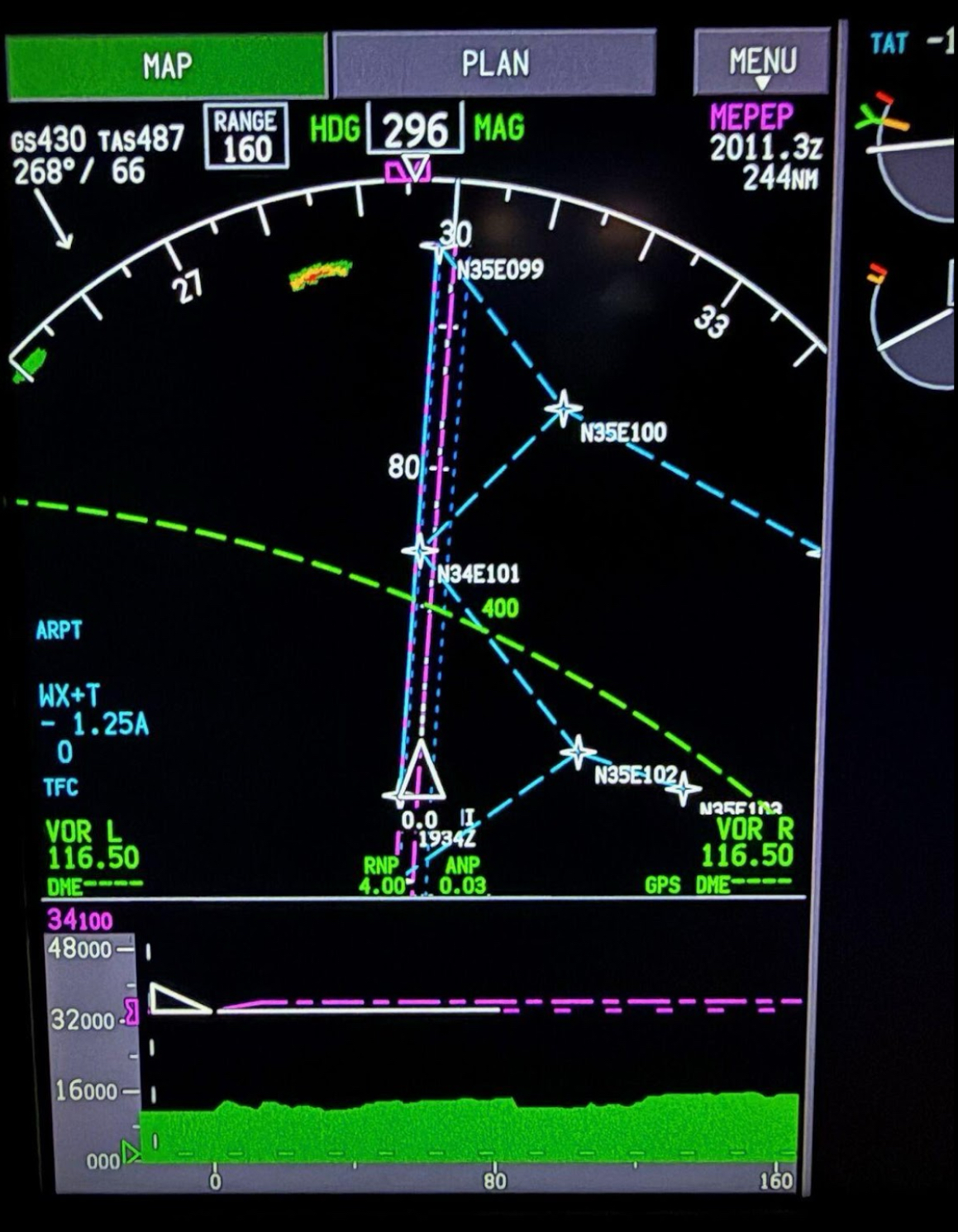
Fortunately the company produces what are called “escape routes”. They show us the safest initial actions to take on the basis of our position, to evade any terrain.
They make use of decision points (DPs): prior to this point, go back via XYZ, after, continue to XYZ. Sometimes a route has many DPs. We need to study these very carefully.
We program the escape routes into the flight management computer in advance to reduce workload in the case of a failure, as in the picture. We discuss with each other the passing of DPs and see if we agree on the initial actions to take.
🌩️ Non-standard Situations
There can be also non-standard reasons for an increased workload during cruise phase, for instance weather and associated icing conditions. These might affect for instance air data systems and cause unexpected failures or reductions in automation.
In these events quality of the training and system knowledge are especially important. This is where a co-co pilot can make the difference!
If you have any questions or are curious about something let us know!
I hope you enjoyed.
